Last updated November 23, 2026
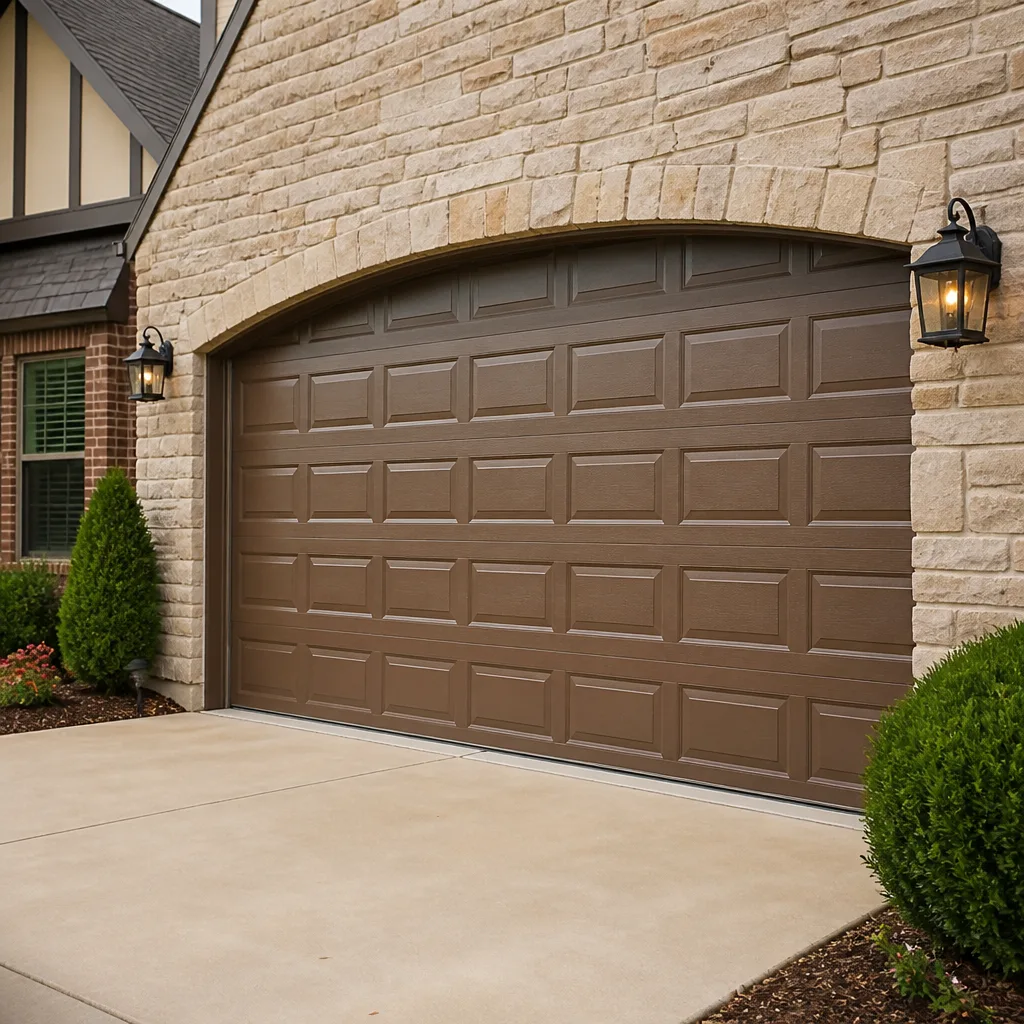 Raised-panel steel
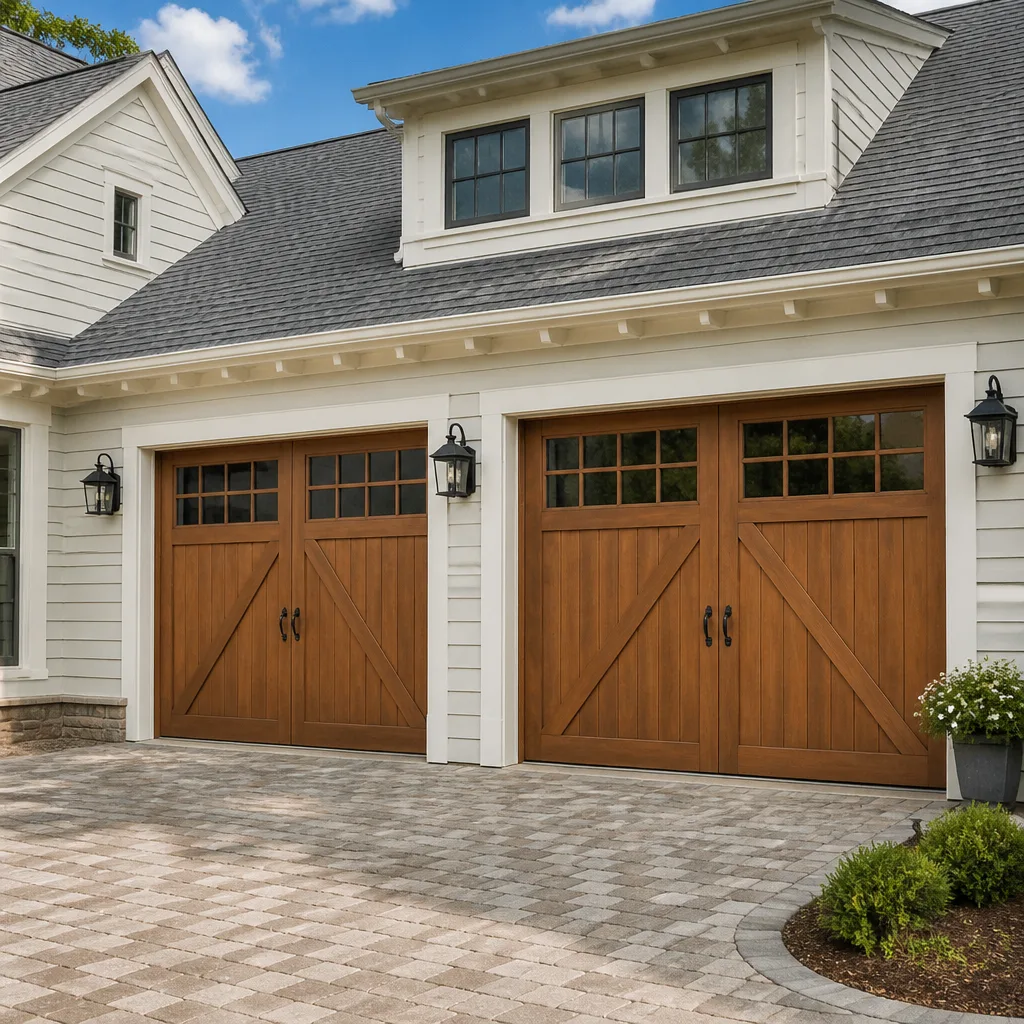 Carriage house
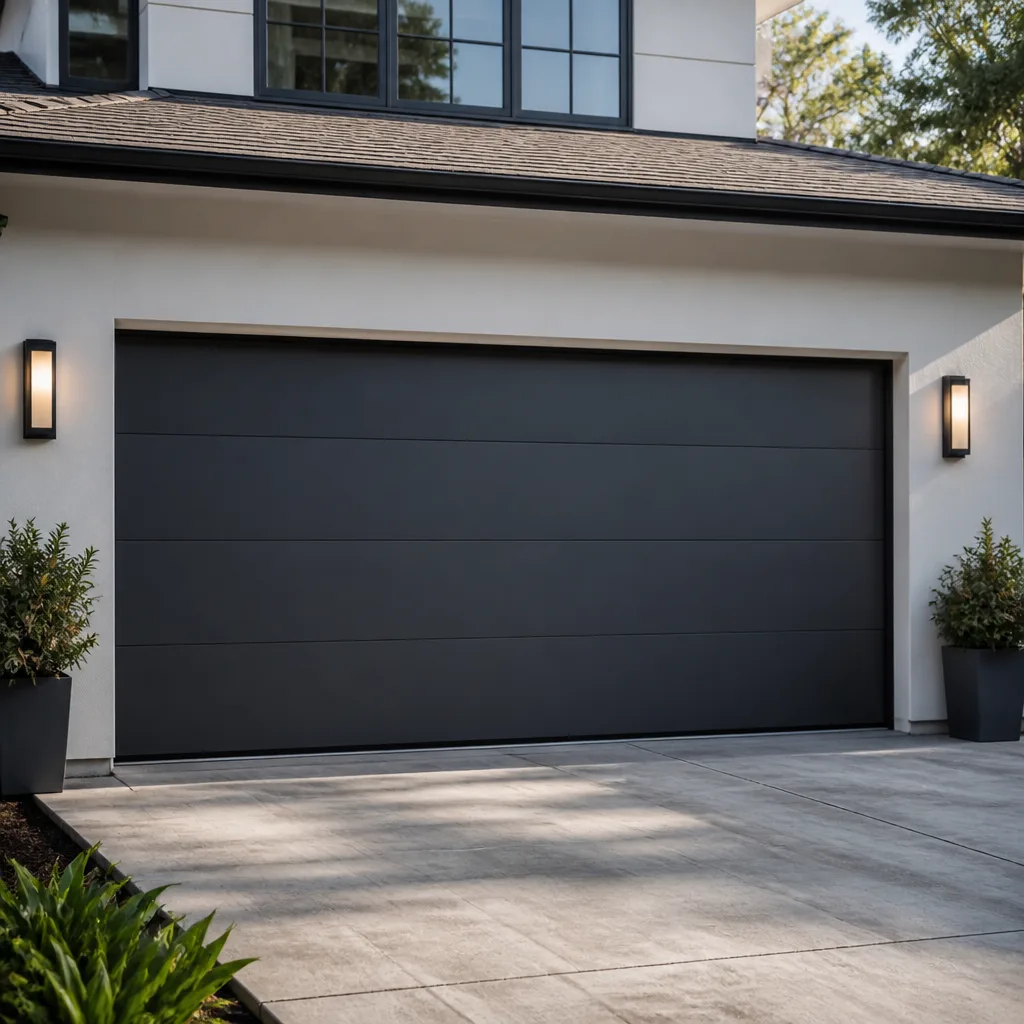 Modern flush
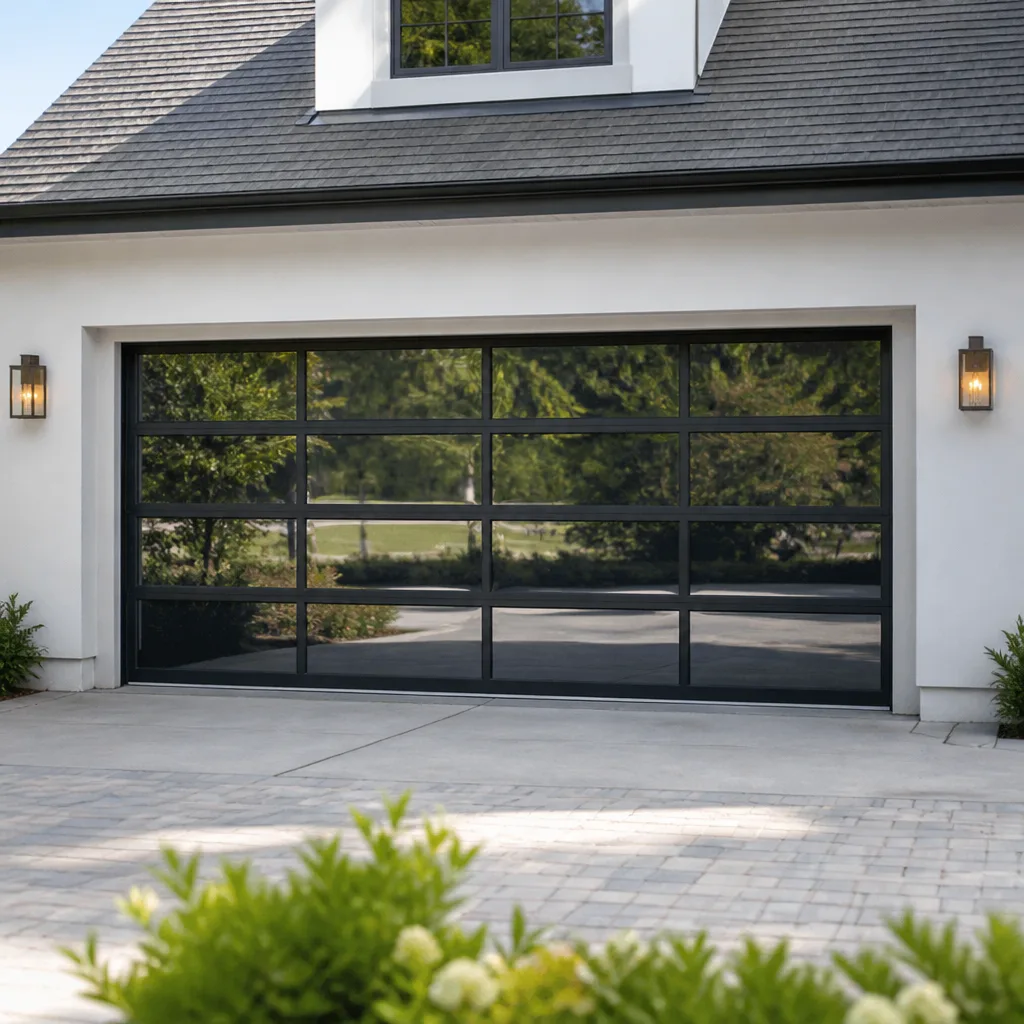 Full-view glass
 LiftMaster openers
 Chamberlain openers
Full 25-point door and opener safety check with every visit - springs, cables, rollers, tracks, and your LiftMaster or Chamberlain opener included
You get a price before we start. It does not change when the pro arrives.
Get your free estimateDIY vs Professional Garage Door: The Pinellas Park Homeowner’s Decision Guide
Torsion springs store enough energy to cause serious injury or death when they’re released the wrong way. That isn’t a liability disclaimer at the bottom of a manual – it’s physics, and it’s the single most important fact this guide covers. The DIY-versus-professional question for garage doors usually gets framed as a skill debate, and that framing misses the point. The real question is which parts of the system can hurt you, which repairs change how the whole door behaves, and which ones touch permits and insurance in Florida. This guide draws a hard line task by task so you know exactly where your own hands are safe and where they absolutely are not. If you’re a homeowner in Pinellas Park weighing a weekend project against a service call, this is written for you.
Quick Answer
Lubrication, sensor alignment, and remote programming are reasonable DIY tasks. Spring replacement, cable replacement, and track work are not – those components hold the door’s full weight and tension, and a mistake can cause serious injury. A full door replacement is also not a DIY project in Pinellas Park, because it typically involves a building permit and wind-load documentation that affect your insurance. Repair work on springs, cables, or a door that’s gone crooked is a call to a trained technician.
Styles & brands we work with
- Raised-panel steel
- Carriage house
- Modern flush
- Full-view glass
- LiftMaster openers
- Chamberlain openers
Table of Contents
- The Real Line: What Makes a Garage Door Task Safe or Dangerous
- Tasks That Are Genuinely Safe to DIY
- Tasks That Should Never Be DIY
- The Florida Problem: Permits, Wind Load, and Your Insurance
- The Honest Cost Comparison
- Partial DIY: Where You Can Save on a Professional Repair
- When a “Simple” Fix Is Really a Structural Warning
- Common Mistakes to Avoid
- When to Call a Professional
- Frequently Asked Questions
- The Bottom Line
The Real Line: What Makes a Garage Door Task Safe or Dangerous
Almost everything about a garage door is springs and counterbalance. The door itself can weigh a couple hundred pounds, and the springs are what let a ten-year-old lift it with one hand. Those same springs are also what makes the wrong repair lethal. Two spring types matter here: extension springs, which run along the horizontal tracks and stretch under tension, and torsion springs, which mount on a shaft above the door and wind up. Torsion springs are the more dangerous of the two. When one is unwound incorrectly, the energy that was holding the door up has nowhere to go but out, and the tools in your hand go with it.
There’s a second hazard most people don’t think about: the cables. They’re thin steel that runs from the bottom corner bracket up to a drum, and they’re under the same tension as the spring doing the lifting. A cable that lets go while you’re working near it can cause real damage. So the rule isn’t “how hard is this repair,” it’s “what’s under tension when I touch it.”
Here’s a cleaner way to think about it. Frame the job on the door into three buckets:
- Unloaded and low-risk: Lubrication, weather seal replacement, sensor cleaning, remote and keypad programming. The door sits on the ground or the opener isn’t engaged, and nothing is under spring tension you have to release.
- Mechanically involved but not spring-adjacent: Replacing a hinge, tightening a bracket, adjusting the opener travel limit, or swapping a roller. These are within reach for a careful homeowner, provided the door is fully down and the opener is disengaged.
- Under lethal tension or changing the door’s lift geometry: Spring replacement, cable replacement, drum work, and track replacement all sit here. So does replacing the door itself. These are technician work, full stop.
Understanding that classification is what makes the rest of this guide useful. It’s not about how handy you are – it’s about where the stored energy sits. If you’ve never thought about how a garage door in Pinellas Park gets to be so heavy and yet so easy to lift, this is the physics under the question.
Tasks That Are Genuinely Safe to DIY
Some maintenance is worth doing yourself, and doing it regularly prevents the repair calls that cost real money. The tasks below are safe because the door is fully down, the opener is disengaged, and you’re not touching the spring system at all. In our experience, most of what goes wrong with a garage door in the first few years is in this category – small adjustments and lubrication – not a spring that fails out of nowhere.
The single most useful habit is quiet maintenance during milder months, which in Pinellas Park means summer is the season to be working on the door rather than pressing your luck in the afternoon heat. Concretely:
- Lubricate the moving parts. Tracks, rollers, hinges, and the pivot points get a garage-door-rated lubricant, not WD-40 (which is a solvent, not a lubricant). Twice a year is plenty. Keep lubricant off the safety sensor lenses and off the spring itself.
- Test the safety sensors. Close the door and pass a hand or a small object through the beam. If the door doesn’t reverse, the sensors are misaligned or dirty. Wipe the lens and check alignment – most sensors have a small LED that turns amber to green when both sides see each other.
- Program or replace remotes. Universal remotes and keypads for Genie, LiftMaster, Chamberlain, and Craftsman openers can be paired at the opener’s “learn” button. This is a genuine DIY task for anyone who reads the manual once.
- Replace the bottom weather seal. The rubber seal under the door lifts out of the retainer and slides back in after you cut a new piece to length. It’s a quiet afternoon job and helps keep rainwater and small critters out of the garage.
- Re-balance the door. Disengage the opener, lift the door to hip height, and let go. A properly balanced door stays put. If it drops or creeps up, that’s the first sign the springs need attention from someone qualified.
None of this requires a permit, none of it requires a ladder above the door, and none of it touches a component that can maim you. If you can change a headlight bulb, you can handle this list.
Tasks That Should Never Be DIY
A torsion spring that fails while being replaced has the energy to throw a person off a ladder or break a wrist. That’s the plain reason this isn’t a home project. This isn’t about telling you it’s too hard. It’s about telling you the physics doesn’t give you a warning before it hurts you, and there’s no “practice” layer to a spring replacement the way there is with a hinge or a seal.
The following repairs are technician work:
- Spring replacement (torsion or extension). Even the “easy” extension springs mounted above a car hood carry enough tension to cause injury. Torsion springs run at hundreds of pounds of torque. Both require winding bars, a technique for releasing stored energy safely, and knowing exactly how many turns the new spring needs. Our garage door spring repair service exists specifically because this is a trained, safety-critical repair.
- Cable replacement. Cables are under the same load as the spring, and a struck cable under tension can slice skin or worse. Don’t cut a cable to see what happens.
- Track replacement and realignment. A track that’s out of plumb is a symptom, not a standalone fix. If you replace the track without finding out why it moved, the new track will move too.
- Drum and shaft work on torsion systems. The shaft holds both springs and both drums. The door’s weight passes through it.
- Panel replacement after impact. A damaged panel is usually the visible part of structural damage underneath, even if the door still rolls.
- Full door replacement. That’s covered in the next section, because the Florida-specific reasons are different from the safety reasons.
The wrong way to frame this is “professionals have better tools.” The right frame is “this repair releases a stored load you can’t safely stop.” That’s a hard line, and it’s the one case where we don’t talk a smart homeowner into handling it themselves.
The Florida Problem: Permits, Wind Load, and Your Insurance
A full garage door replacement in Florida is not the same job it is in Ohio. The reason isn’t the door, it’s the paperwork around it. Garage doors are among the most common wind-entry points on a Florida home, and the building department cares about that. So does your insurance company. Whether you replace a door yourself or hire the replacement out, that dimension doesn’t disappear.
Two things are almost always true of a full replacement here:
- Your city’s building department typically requires a permit for a garage door replacement. Rules vary and can change, so confirm directly with Pinellas Park’s building department before ordering a door. Don’t assume; ask.
- The door’s wind-load rating has to be documented. That documentation usually comes with the door – a manufacturer’s rating label or a Noa/approval document tied to the specific model and the opening size.
Here’s the insurance angle. If you replace your garage door yourself without a permit and without a wind-load rating that matches the opening, you create a situation where an insurance claim after a storm may not cover the door. Adjusters don’t just ask whether the door is new; they ask whether the door meets the wind-load requirement for your home’s opening size and whether the install is documented. A door that functions fine but has no paper trail behind it is a gap in your coverage that you won’t discover until you need it.
This is where DIY gets expensive in a way that doesn’t show up on the receipt. A door that cost a few hundred less from a big-box store but has no permit and no rating documentation can cost far more the first time you file a claim. If you’re comparing a DIY install to a professional one, add the value of being insurable on the professional side. When it’s done right, the local pro provides the permit, the wind-load documentation, and an install that matches the opening. When we connect you with a technician for a Pinellas Park Garage Door Repair, that work is done to the standard the building department and your insurer expect.
The Honest Cost Comparison
This is where the pitch usually gets inflated, so we’ll do the opposite. The honest answer is that DIY is sometimes cheaper, sometimes not, and the crossover point depends entirely on which repair we’re talking about. Here’s the breakdown without the sales language.
Estimates below are typical for the Pinellas Park market. A written quote from a technician is the final word on price, and a free estimate gives you that for your door specifically. The line-item comparison:
| Task | DIY parts + time | Professional estimate | Verdict |
|---|---|---|---|
| Lubrication + sensor check | $10 – $20 in lubricant, 30 minutes | $100 – $150 service call | DIY the clear winner |
| Bottom weather seal replacement | $20 – $40 in parts, 1 hour | $150 – $250 | DIY if the retainer is straight |
| Remote + keypad programming | $0 (manual + remote) | $80 – $150 | DIY every time |
| Roller replacement | $15 – $40 in parts, 1 – 2 hours | $150 – $250 | DIY if the door is down and disengaged |
| Torsion spring replacement (one spring) | $40 – $100 in parts; injury risk | $180 – $340 | Professional, not negotiable |
| Torsion spring pair | $80 – $200 in parts; injury risk | $360 – $680 | Professional, not negotiable |
| Opener replacement (chain drive) | $150 – $250 in parts, 3 – 4 hours | $350 – $600 | Borderline; harder on a torsion door |
| Full door replacement (single-car) | $600 – $1,200 in parts + permit + wind-load doc; risk of uninsurable gap | $1,400 – $3,000+ depending on size, brand, and insulation | Professional, because of the permit and documentation |
Read that as a signal about which repairs justify a call, not a reason to DIY everything on the left. The pattern is clear. Small maintenance tasks are yours to keep. Anything above hip height, under spring tension, or involving a permit belongs to a trained technician.
One more honest note: the $180-$340 for a single torsion spring is not a “we’re marking it up” number. It covers the spring, the winding bars, the technician’s training, and a warranty on the work. On the DIY side, if a torsion spring fails while you’re installing it, there’s no warranty and no second opinion, and the hospital bill isn’t a line item you budgeted for. Price the risk honestly and the equation flips.
Partial DIY: Where You Can Save on a Professional Repair
The most underused option in the whole conversation is partial DIY: hiring a technician for the dangerous part while you handle the safe parts around it. There’s no reason to pay a service call for things you’d normally do yourself, and there’s no reason to risk your hand on a spring. The middle path is where you save real money without pretending the spring is a weekend job.
Here’s how a partial-DIY repair works:
- Clear the garage before the technician arrives. Move the car, clear the floor under the door, and lock up any pets. This is a small thing that saves the tech time, and you’re not paying for someone to move a bike.
- Do the pre-diagnosis yourself. Note what’s happening: does the door sag on one side, do you hear a snap, does the opener run but the door not move, does the door reverse mid-close. Write it down. That saves diagnostic time on the invoice.
- Handle the cosmetic and weather-seal parts. Bottom seal, weather stripping, and the little sensor-cleaning tasks are yours. Ask the technician to leave the seal in place if they can; it lets you finish the easy part yourself.
- Let the technician do springs, cables, and drums. This is the non-negotiable part of the repair, and it’s the part they’re trained for.
- Re-lubricate the door after the repair. Once the technician has been out, you can re-apply lubricant to the moving parts yourself. That’s the maintenance interval covered for another six months at zero cost.
The savings here are real but modest – typically $50 to $150 per service call depending on what you handle yourself. It’s not a way to avoid a spring call. It’s a way to make the spring call shorter and cheaper.
When a “Simple” Fix Is Really a Structural Warning
Some of the safest-looking jobs are actually symptoms of a bigger problem, and understanding that changes the risk calculus on a repair that looks easy. The most common trap is an opener that decides not to run. People assume the motor died, replace it, and discover the actual problem is a spring that’s no longer holding the door’s weight. The new opener is now doing the work of a spring, which burns it out and leaves you right back where you started with a bigger invoice.
Watch for these pairings. Each one changes the decision from “small fix” to “get eyes on the whole door”:
- Opener runs but door barely moves or stops partway. Often the spring has failed or lost tension, and the opener’s force adjustment is masking it. This is the classic case where a replacement opener is money thrown away.
- Door goes up crooked or sags on one side. Usually a broken spring on one side or a stretched cable. Replacing one without the other is how you end up doing the whole job twice.
- Door reverses immediately after touching the ground. Sensor is the easy answer, but if the sensor is clean and aligned and it still reverses, the track or a roller is binding. That’s the point to stop and call.
- Loud bang from the garage, then a door that suddenly feels very heavy. That’s a spring failure. It’s not dangerous to you standing there, but it is dangerous to try to open or repair without training.
- Creaking and popping that keeps getting worse. Rollers or track, not the spring – but worth a look from a technician before a roller failure sends the door off its track.
In our experience, a technician trained across the major brands – LiftMaster, Chamberlain, Genie, Clopay, Amarr, Wayne Dalton, Craftsman, and Raynor – sees this pattern fast. A Genie opener can be doing its job fine while the door behind it is fighting a stretched spring. Diagnosing the symptom correctly the first time is what keeps a small repair small.
See the difference
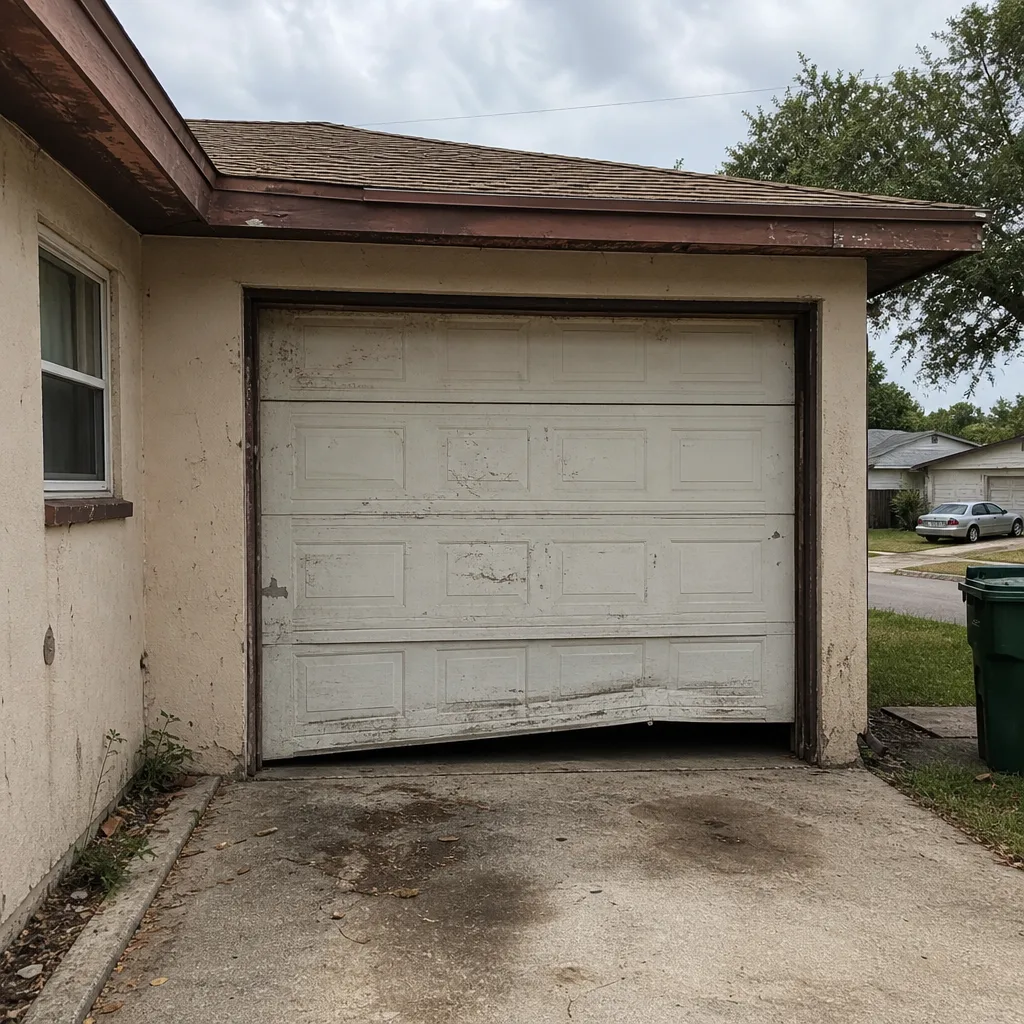 Before
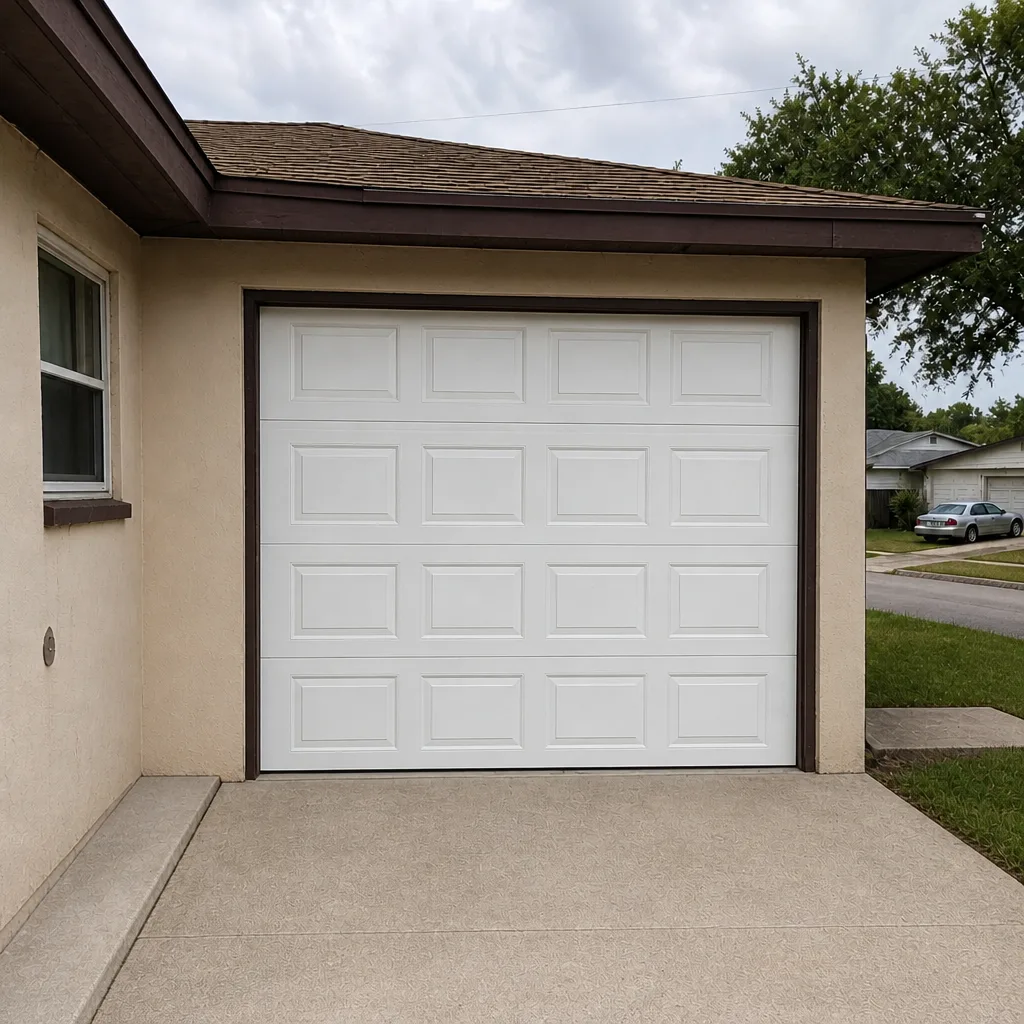 After
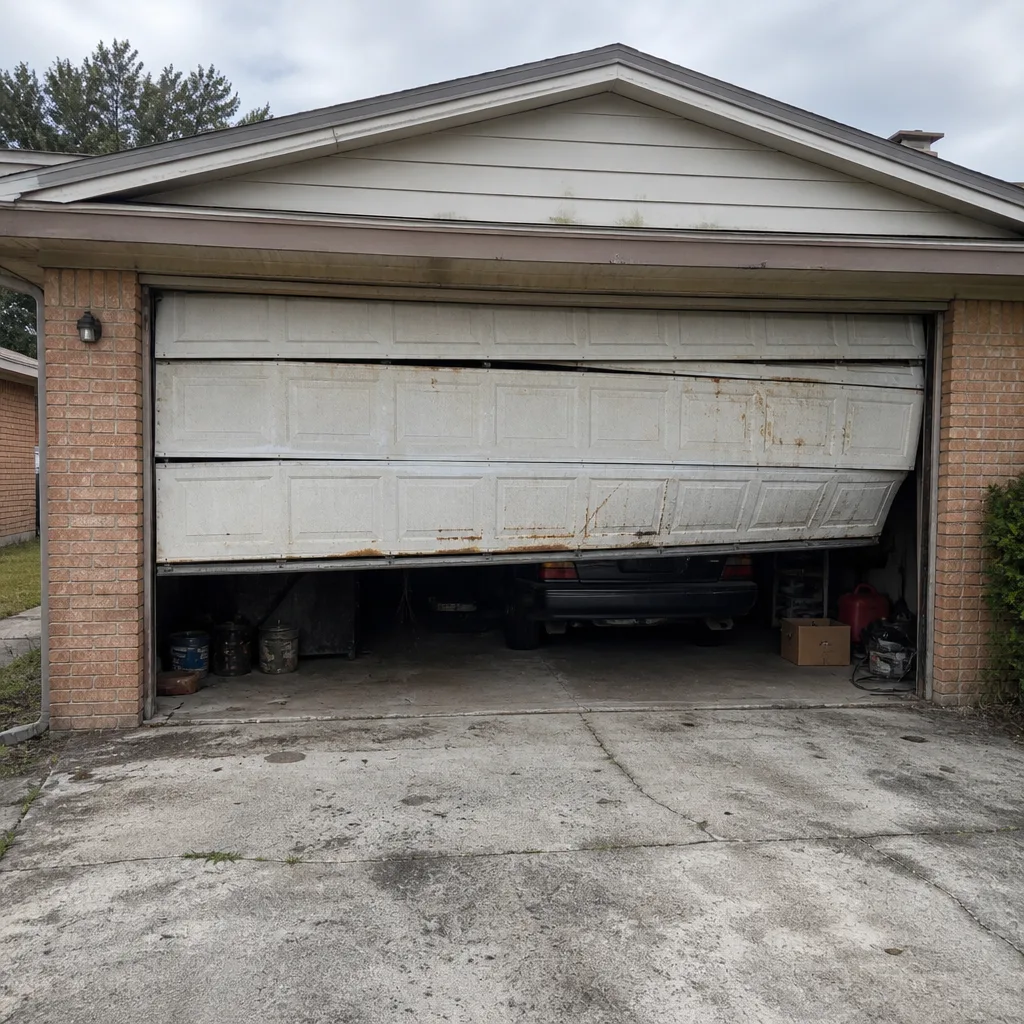 Before
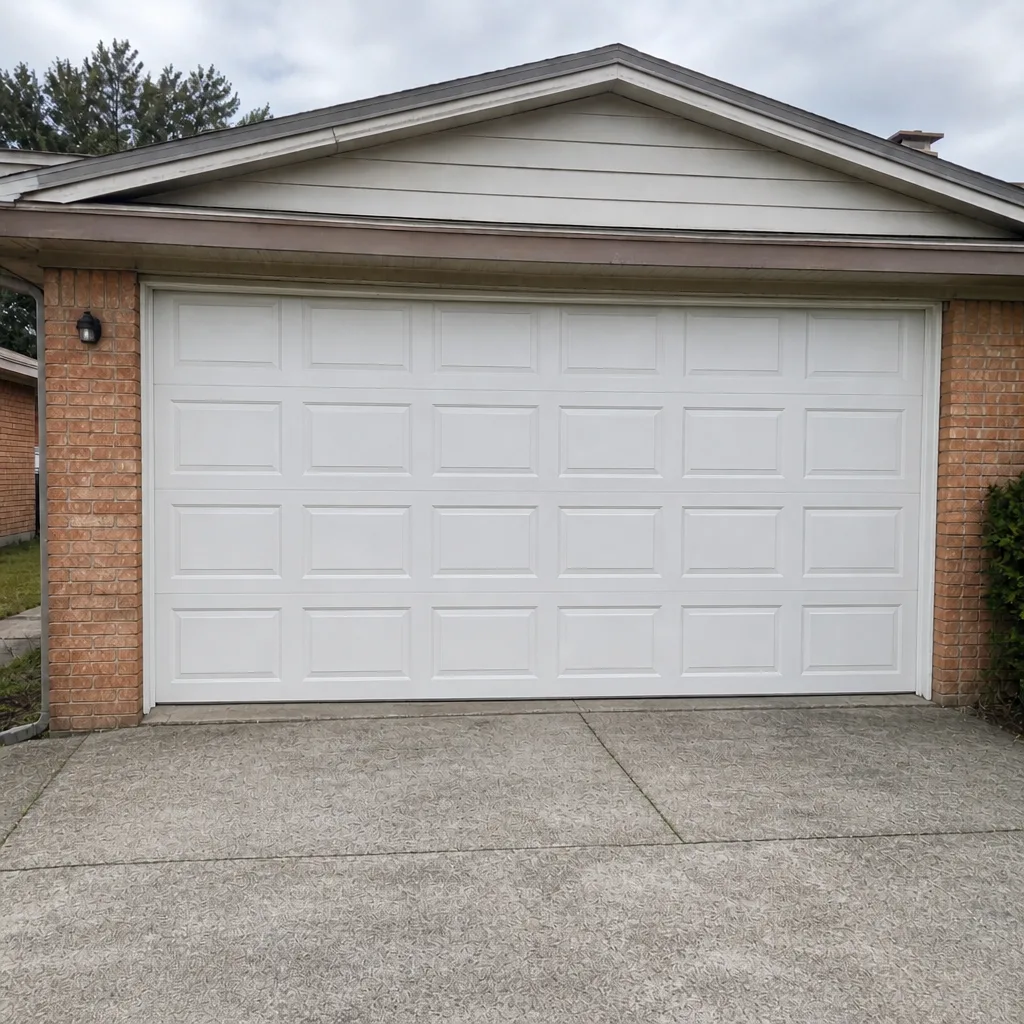 After
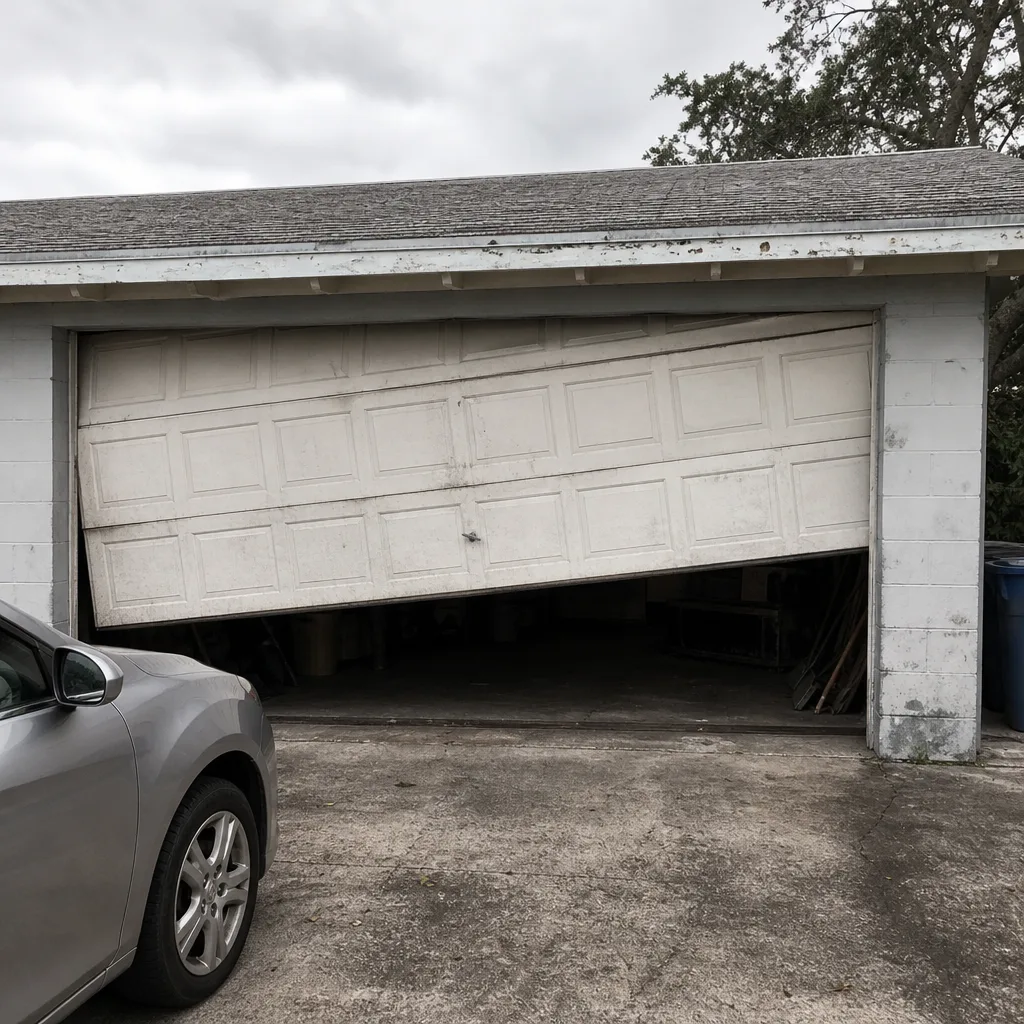 Before
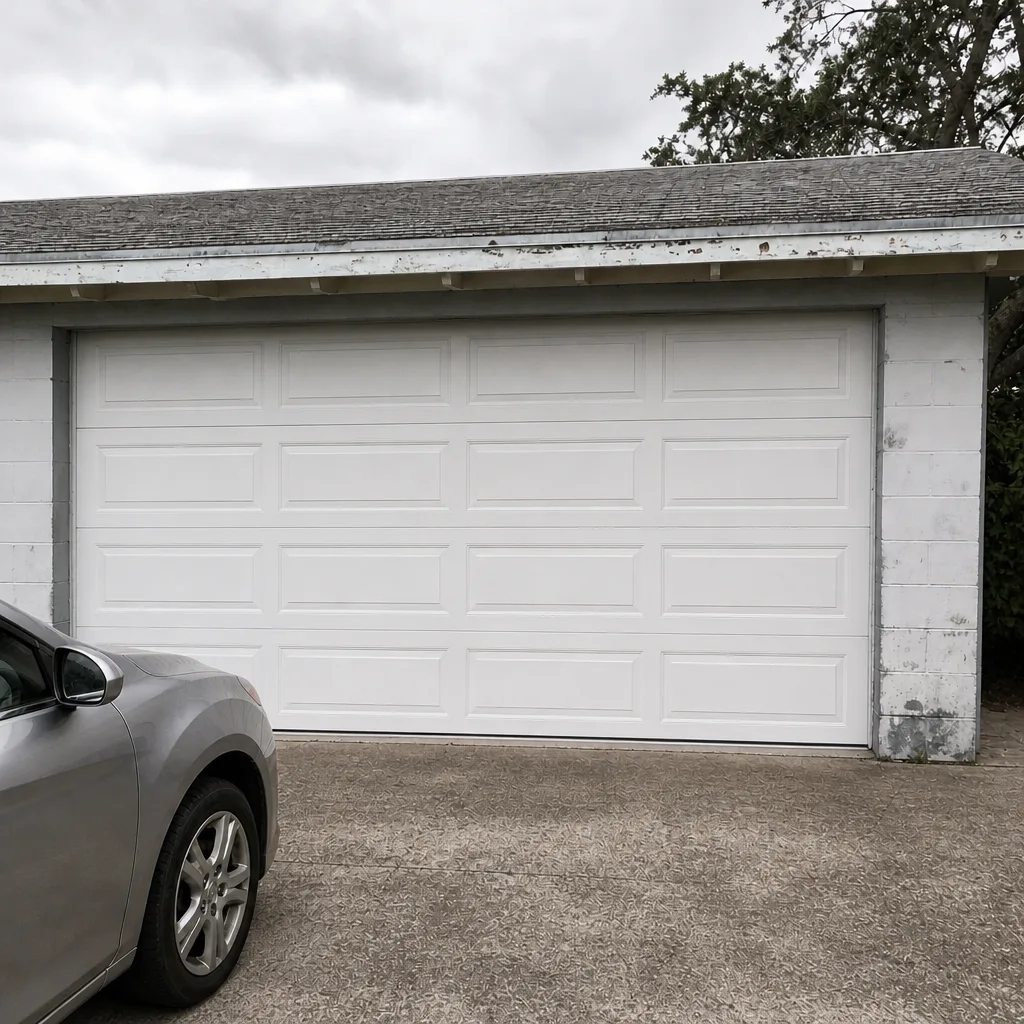 After
Common Mistakes to Avoid
- Cutting a spring to “release” it. There’s no safe way to cut a torsion spring under load. This is how people end up in emergency rooms. Don’t do it, no matter what a video says.
- Replacing the opener before diagnosing the door. If the door is heavy or binds, a new opener will work extra hard and die young. Have a technician check the door first.
- Replacing one torsion spring when both are the same age. The second spring is usually just as tired. Doing one now and the other in a few months costs more in the end than replacing the pair.
- Skipping the permit on a Pinellas Park door replacement. It’s tempting to save the paperwork. The gap it creates in your wind-load documentation and your insurance coverage is bigger than the permit fee.
- Lubricating the tracks with the wrong product. WD-40 on a track attracts grit and makes the door noisier over time. Use a garage-door-rated lubricant, and keep it off the spring itself.
- Using a ladder to reach a torsion spring. Even with the right technique, working at height on a loaded torsion system is how a survivable repair becomes a fall.
- Assuming a “noisy door” is a “needs new door.” Usually it’s rollers and a dry hinge. The cheapest repair is often one you can handle yourself.
When to Call a Professional
Call a technician when any of these are true: you hear a loud bang from the garage and the door feels suddenly heavy; the door is crooked, sagging, or off its track; a cable is visibly frayed or hanging; the opener runs but the door doesn’t move properly; the door slams down or reverses for no clear reason; or you’re replacing a door or panel and want a permit and wind-load documentation done correctly. Emergency service covers the cases where your car is trapped or the door won’t close and the house is open – call rather than wait. For the deeper repair categories, our garage door repair covers springs, cables, tracks, and openers as one service. Pinellas Park Garage Door Repair offers free estimates in Pinellas Park – call (877) 509-4184. We work on the brand you already have, so a mismatched opener or an older panel doesn’t turn into a sales conversation. When the diagnosis is a spring or an install, we can also connect you with a certified technician for garage door opener repair if that’s what the symptom actually turns out to be.
Frequently Asked Questions
No. Torsion springs are under hundreds of pounds of stored tension and extension springs can cause serious injury even when they look manageable. A spring under load has no safe way to be released by an untrained person. Call a trained technician – spring repair is a specifically trained, safety-critical job, and the risk isn’t worth the savings. Call (877) 509-4184 for a free estimate.
Usually yes – most Florida building departments require a permit for a full garage door replacement, and wind-load documentation is part of the process. Local requirements can change, so confirm with the Pinellas Park building department before you order a door. Skimping on the permit and the wind-load rating creates a gap in your insurance documentation that can cost more than the permit saves. Call (877) 509-4184 if you want the permit and documentation handled for you.
Replacing a wall-mounted opener on a manual-lift door is doable for a careful homeowner, but it gets harder on a torsion-spring door because the opener has to be paired with a properly balanced door. If the door feels heavy or the track is off, fix the door first – a new opener on a struggling door will burn out early. Call (877) 509-4184 and we’ll tell you whether the opener is the actual problem.
A single torsion spring replacement typically runs $180 – $340 in Pinellas Park, and because matched pairs are usually replaced together, a pair runs roughly $360 – $680. Extension springs cost a bit less. The written estimate sets the final price, and you approve it before any work starts. Call (877) 509-4184 for an exact quote – estimates are free.
If the replacement isn’t permitted and doesn’t have documented wind-load rating for your opening size, an insurance claim after a storm may not cover the door. That’s the real risk of DIY installation in Florida – not that the door won’t work, but that it won’t be documented when you need it. Call (877) 509-4184 and we’ll connect you with a technician who can provide the permit and rating paperwork.
Lubrication, sensor cleaning and alignment, remote and keypad programming, and bottom weather seal replacement are the DIY tasks that save the most versus a service call. Each is under $40 in parts and doesn’t touch a loaded spring or a permit. If you can change a headlight bulb, you can handle these. For anything above that, call (877) 509-4184 – a free estimate will tell you what the safe part looks like.
The Bottom Line
The DIY-versus-professional question for garage doors isn’t a skill test – it’s a stored-energy test, plus, in Pinellas Park, a documentation test. Lubrication, sensors, remotes, and weather seals are yours. Springs, cables, drum work, and full door replacement aren’t. The Florida angle adds a real cost to getting the install wrong: permit and wind-load documentation aren’t optional paperwork, they’re what makes the door insurable. Price the risk honestly and the calculus flips toward a trained technician for anything under tension. Full replacements are a scheduled, measured job – get a free measure and a written price rather than promising a same-day install. We work on the brand you already have, including Clopay, Amarr, Wayne Dalton, and Genie systems, so a diagnosis stays a diagnosis. Our technicians have up to 8 years of experience. If you’re still unsure which bucket your repair falls into, call Pinellas Park Garage Door Repair at (877) 509-4184 for a free estimate – we’ll give you the straight answer, even when the answer is “you can handle that part yourself.”
Written by the team at Pinellas Park Garage Door Repair.