Last updated November 23, 2026
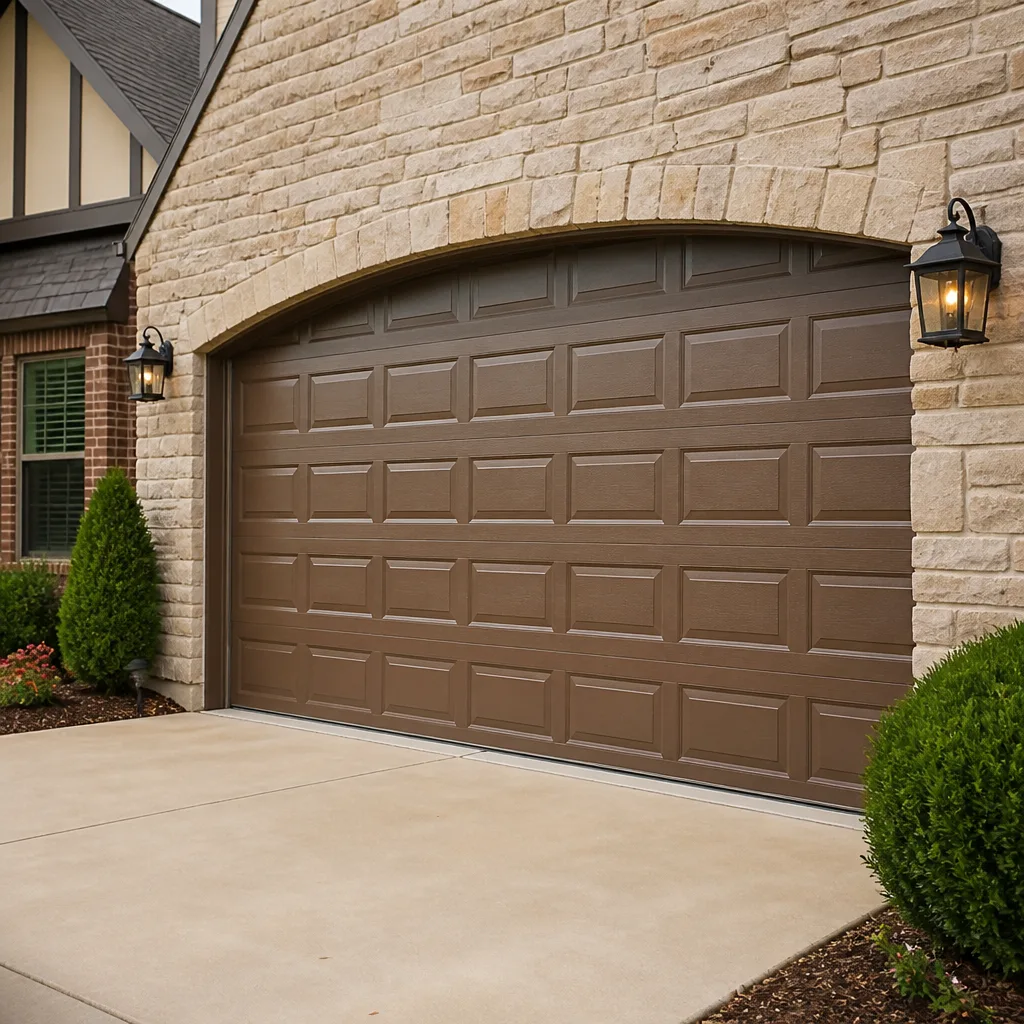 Raised-panel steel
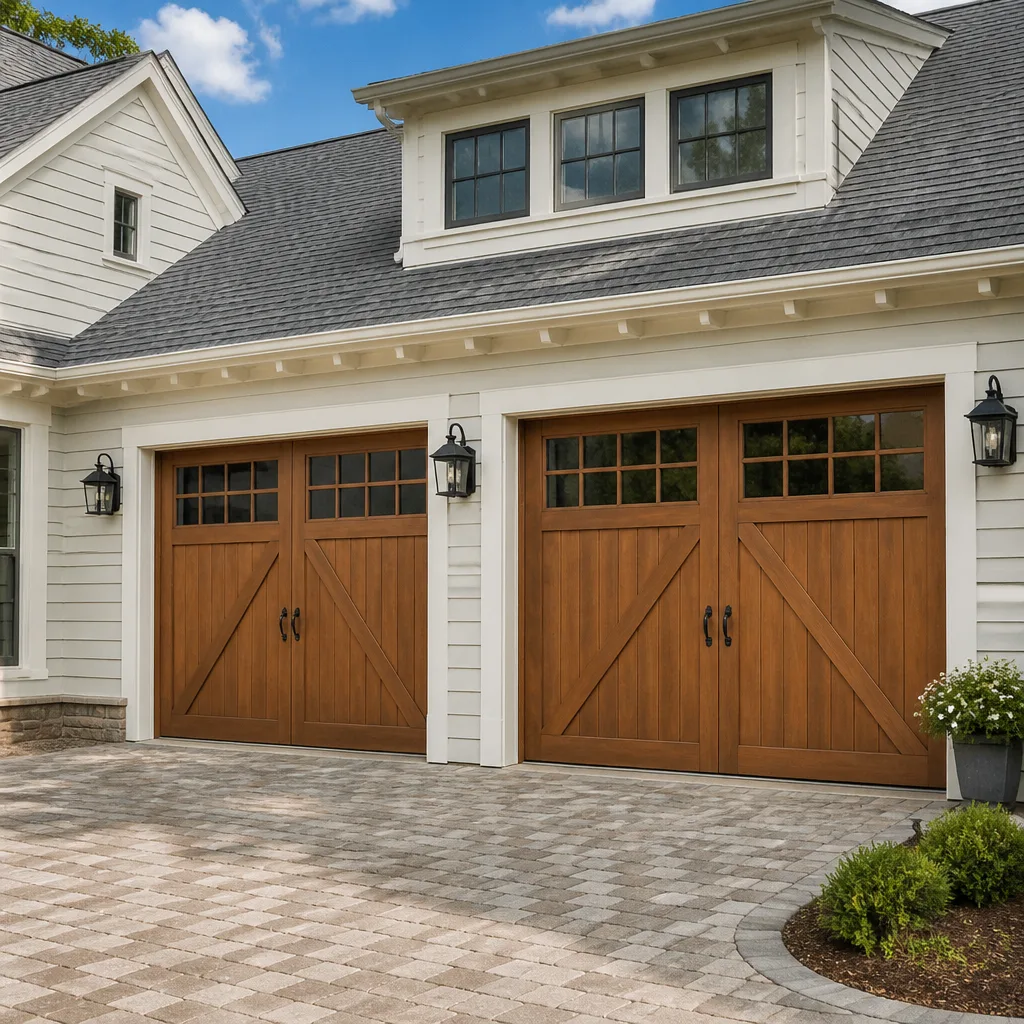 Carriage house
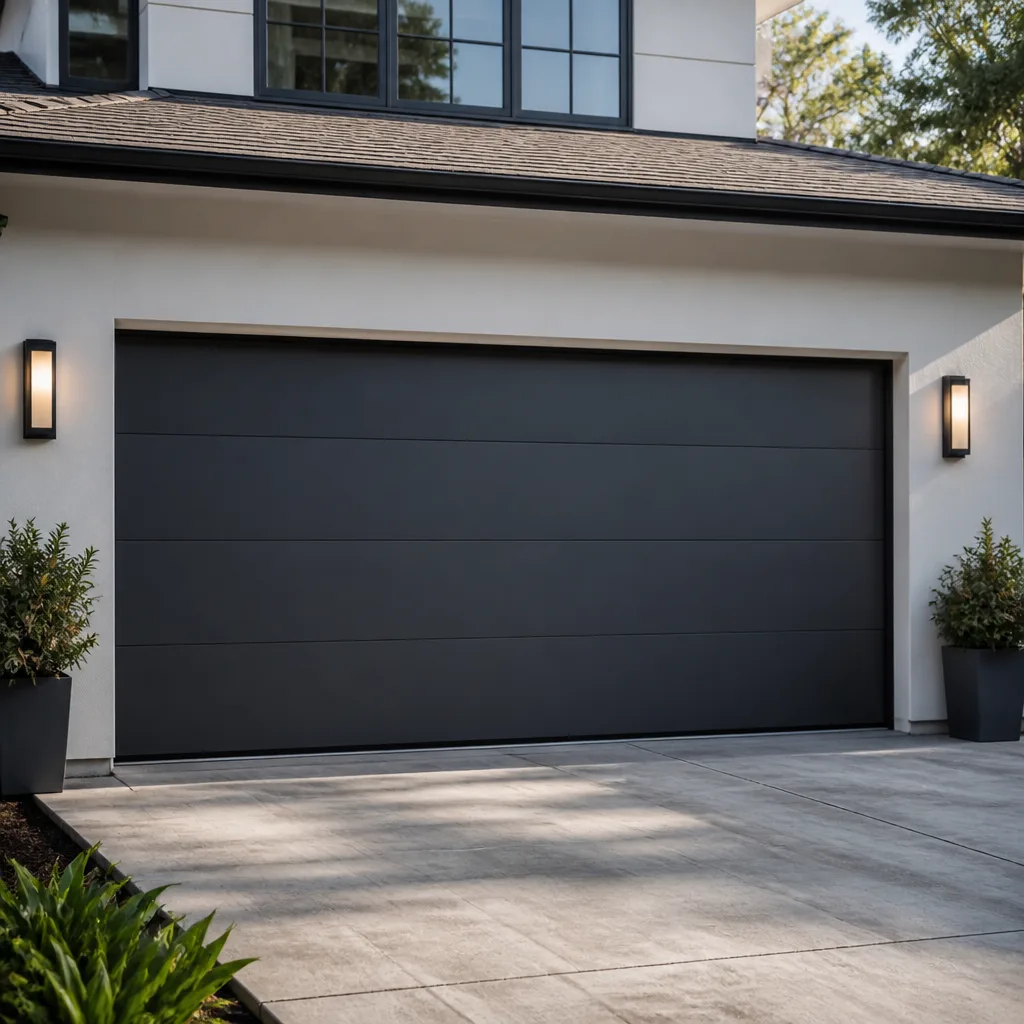 Modern flush
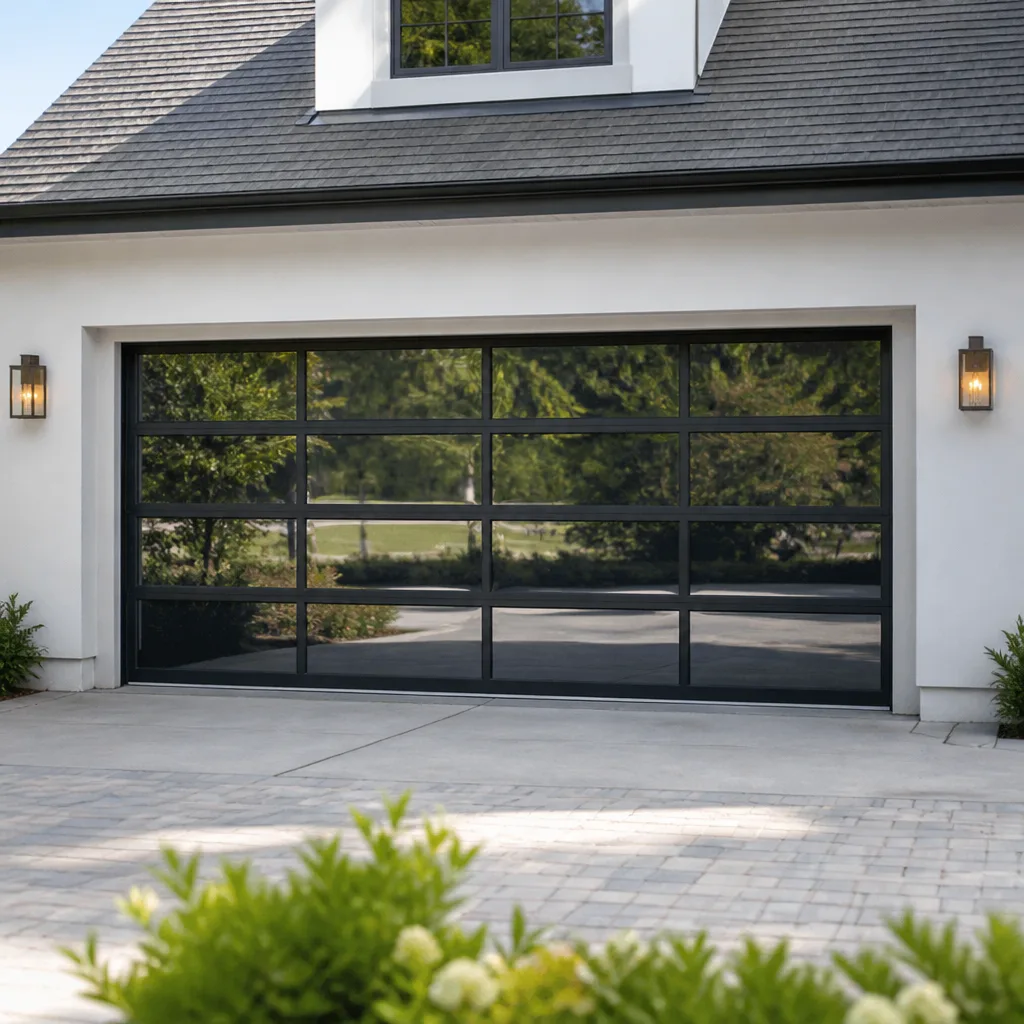 Full-view glass
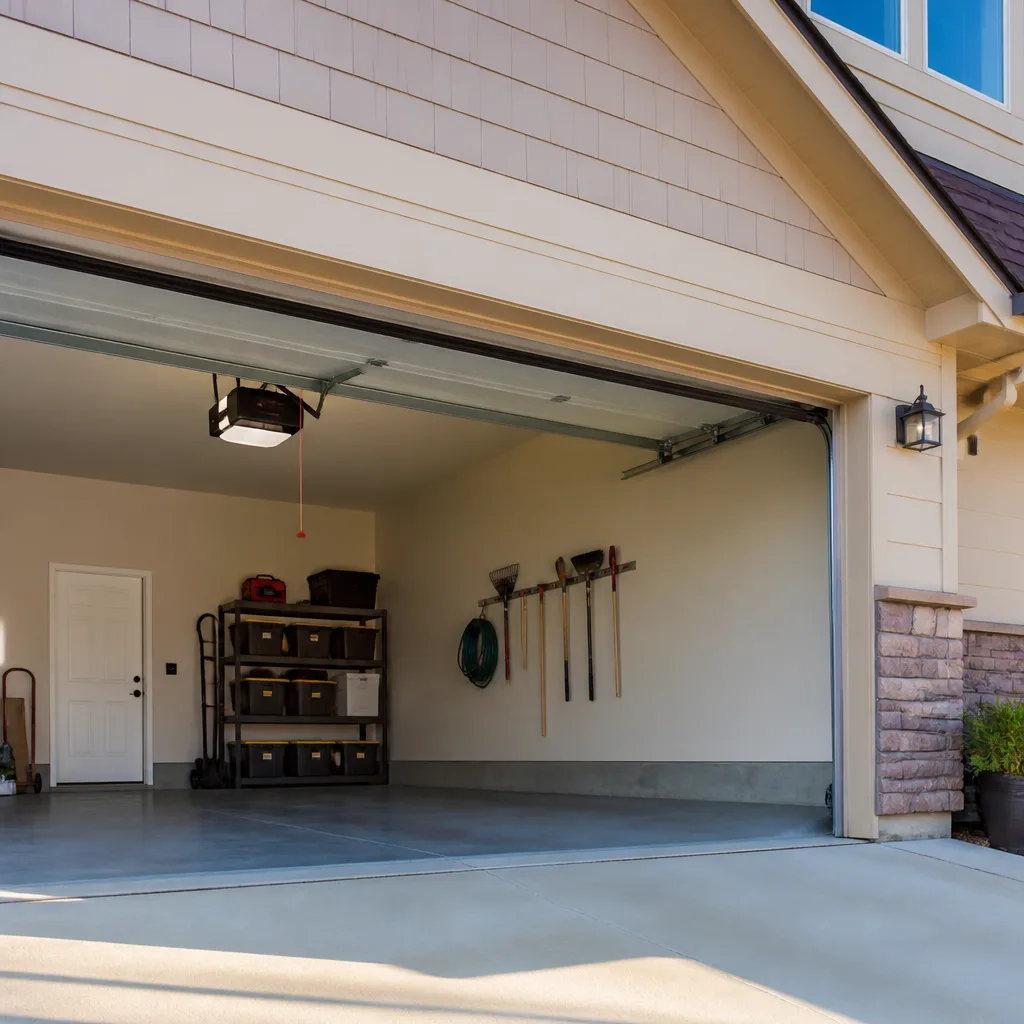 LiftMaster openers
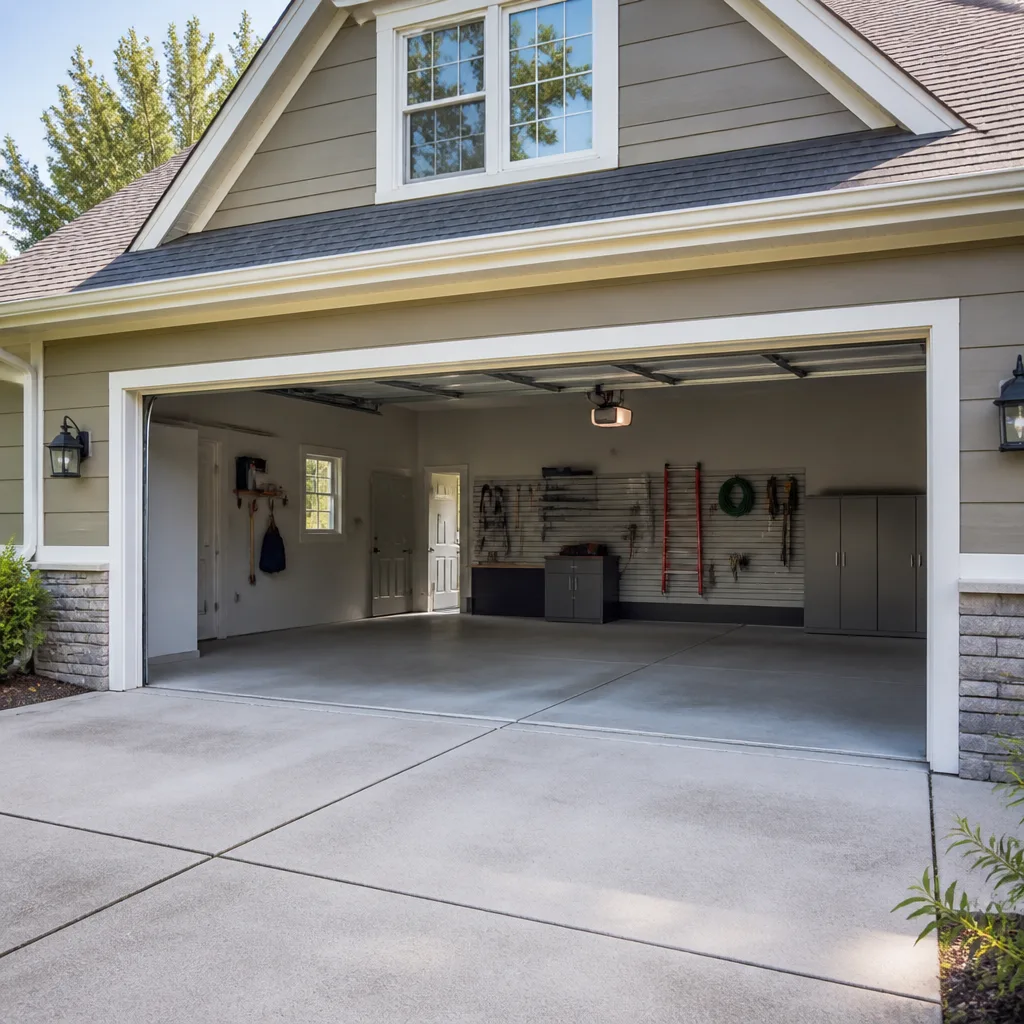 Chamberlain openers
Full 25-point door and opener safety check with every visit - springs, cables, rollers, tracks, and your LiftMaster or Chamberlain opener included
You get a price before we start. It does not change when the pro arrives.
Get your free estimateThe Complete Guide to Garage Doors in Pinellas Park
Most garage door advice you’ll read online was written for a four-season suburb where the air is dry and the biggest threat is a frozen spring in January. That’s not Pinellas Park. Here, a door faces year-round humidity, wind-driven rain, and a building code written around storms rather than snow. The counterintuitive part: a door that looks perfectly fine on the outside can be quietly corroding on the inside, and a spring rated for 10,000 cycles in a dry climate may give you far less in Tampa Bay’s humid air. This guide covers what that means for springs, cables, tracks, openers, materials, and code – and where the DIY line actually falls for a Pinellas Park homeowner.
Quick Answer
A garage door in Pinellas Park lasts longest when you choose a finish and hardware built for humid, windy conditions, keep the moving parts clean and lubricated, and understand that Florida Building Code wind-load requirements apply to replacement doors in Pinellas County. Springs, cables, and openers are professional jobs; cleaning tracks, testing the safety reverse, and lubricating rollers are reasonable DIY tasks. Most doors here fail from corrosion and worn springs rather than cold-weather damage.
Styles & brands we work with
- Raised-panel steel
- Carriage house
- Modern flush
- Full-view glass
- LiftMaster openers
- Chamberlain openers
Table of Contents
- Why Pinellas Park Garage Doors Age Differently
- Florida Building Code and Wind-Load Requirements in Pinellas County
- Which Door Materials Hold Up Best Here
- Springs and Cables: The Parts That Fail First
- Choosing and Servicing a Garage Door Opener
- DIY vs. Professional vs. Emergency
- Brands and Hardware That Are Actually Serviceable Locally
- A Maintenance Routine That Fits This Climate
Why Pinellas Park Garage Doors Age Differently
A garage door is mostly metal, and metal’s worst enemy isn’t cold – it’s moisture and salt. Pinellas Park sits in a humid, coastal county where the air carries salt and the rainy season keeps surfaces damp for months. That combination reaches the parts of your door you rarely see: the hinges, the bottom bracket, the cable drums, and the inner faces of the panels. A door can look clean from the driveway while the hardware underneath is already pitting.
Compare that to an inland market where the air dries out and springs rust slowly. Here, moisture hangs around. Springs fatigue and corrode at the same time. Cables fray where they rub against a slightly stiff drum. Tracks pick up grit and start to bind. The national lifespan figures you’ll read for springs – often quoted around 10,000 cycles – assume a drier, cleaner environment. In a Pinellas Park garage, where the door may open and close several times a day and the air stays heavy, that number can shrink without any obvious sign on the surface.
What that means practically:
- Inspect hardware, not just panels. Look at hinges and the bottom bracket for rust staining, not only the painted face.
- Expect springs to wear from fatigue and corrosion together, not just from use count.
- Keep the bottom of the door clear of pooled water; a garage floor that stays wet shortens the life of every metal part near it.
- Treat a stiff or noisy track as a warning, not a nuisance – grit and moisture cause binding before they cause a jam.
Florida Building Code and Wind-Load Requirements in Pinellas County
Pinellas Park and the rest of Pinellas County fall under Florida Building Code wind provisions, and garage doors are part of the building envelope that has to meet them. That matters most when you’re replacing a door. A new door has to be rated for the wind pressures at your location, and the rated assembly includes the door, the tracks, and the reinforcement together – not just the panel you see. The label on the door isn’t decoration; it documents that the assembly meets the code for your address.
This is where a lot of homeowners get surprised. A door bought from a catalog and installed without attention to the full assembly may not satisfy the code, even if the panels themselves look substantial. The reinforcing struts, heavier hinges, and anchoring all work as a system. Skipping any piece weakens the whole thing.
What to do when you’re planning a replacement:
- Ask your city’s building department what permit and product documentation your address requires. Requirements vary by location and door size.
- Confirm the door you’re considering carries a wind-load rating appropriate to your site, and that the rating covers the complete installed assembly.
- Keep the manufacturer’s documentation and any inspection records for your home’s file – they matter if you ever sell or insure the property.
- Have a trained installer set the door. Wind-rated assemblies only perform as rated when installed correctly.
None of this is a reason to avoid a new door – it’s a reason to buy the right one. A properly rated door protects the house, and in a storm-prone county that’s the entire point of the code.
Which Door Materials Hold Up Best in the Tampa Bay Environment
Three materials cover most Pinellas Park doors: steel, aluminum, and fiberglass. Each handles humidity and salt differently, and the right choice depends on how much maintenance you’re willing to do and how close to the water you are.
Steel is the most common and usually the best value. Modern steel doors are galvanized and coated, which resists corrosion well. The weak point is any cut edge, scratch, or hinge where bare metal shows. Touch up scratches promptly and steel holds up for years. A steel door from a maker like Clopay is a sensible default for most Pinellas Park homes.
Aluminum doesn’t rust the way steel does, which sounds ideal here. The catch is that aluminum can corrode in salt air in its own way, and lighter aluminum doors dent more easily. It works best where weight matters or where a fully rust-proof panel is the priority.
Fiberglass never rusts and won’t dent like metal, but it can fade and chalk under strong sun over time, and the frame and hardware around it still need attention. It’s a good fit for homeowners who want low corrosion risk and are okay with periodic refinishing.
How to decide:
- Choose steel for the best balance of price, strength, and wind-rated availability.
- Choose aluminum where rust is the top concern and you can accept lighter panels.
- Choose fiberglass for corrosion-proof panels and low maintenance, accepting some color fade over the years.
- Whatever the material, the hardware – hinges, rollers, brackets – is steel and is what corrodes first. That’s the part to watch.
Springs and Cables: The Parts That Fail First
Springs carry the weight of the door, and cables keep it on track. Both are under extreme tension, and both are among the most dangerous parts of the whole system. A torsion spring stores enough energy to cause serious injury if it releases unexpectedly, and cables can whip when they snap. This is the repair we treat most seriously, and it’s why we run a dedicated garage door spring repair service rather than treating springs as an afterthought. Our technicians have up to 8 years of experience with high-tension work, and springs are a job for a trained professional – not a weekend project.
In Pinellas Park’s humid air, springs fatigue and corrode simultaneously, so a spring can break earlier than its cycle rating suggests. Cables fray where they rub, and a cable that’s starting to fail usually shows as a door that hangs crooked or jerks on one side. If you see a snapped spring with a visible gap, a door that won’t lift, or a cable that’s come off its drum, stop using the door and call.
Warning signs to watch for:
- A door that feels suddenly much heavier to lift by hand.
- A gap in a torsion spring, or a stretched extension spring.
- A door that goes up crooked or binds on one side.
- Loud bangs from the garage when the door is used.
What we do about it: we identify the spring type and gauge, measure the door’s weight, and replace with a correctly matched spring – or a matched pair, since a pair that’s aged together should usually be replaced together. A single spring replacement is one price; a matched pair typically costs about twice that. We quote the price and agree it with you before any work starts, so the written estimate is what you pay. If your door needs broader repair beyond the springs, see our garage door repair service.
Choosing and Servicing a Garage Door Opener
An opener is a motor and a control system, and in a humid climate the electronics and the moving carriage are both vulnerable. The good news is that openers are brand-agnostic work for us. Whether you have a LiftMaster, a Chamberlain, a Genie, or a Craftsman, we service the system you already own rather than pushing a replacement. Our technicians are trained across all of those brands, which means faster diagnosis and the right parts the first time.
Most opener failures fall into a few categories: the motor runs but the door doesn’t move (a stripped gear or a broken carriage), the door reverses immediately (a safety sensor or force-setting issue), or the remote and wall button stop responding (a logic board or wiring problem). A professional garage door opener repair call sorts which one you’re facing in a single visit.
When you’re choosing a new opener, look for:
- Battery backup, which keeps the door working through a power outage – useful in storm season.
- A quiet belt or screw drive if the garage sits under or beside a bedroom.
- Smart connectivity if you want phone alerts and remote control.
- Compatibility with your door’s weight and height – a heavy, wind-rated door needs a suitably rated motor.
One recurring issue in Pinellas Park: humidity and heat stress the opener’s travel limits and force settings over time, so a door that used to close cleanly starts reversing or stopping short. That’s usually an adjustment, not a new opener.
DIY vs. Professional vs. Emergency: Where the Line Falls
Knowing which jobs you can safely handle saves money and which ones you shouldn’t touch protects you. Here’s how we draw the line for a Pinellas Park home.
Reasonable DIY tasks:
- Lubricating hinges, rollers, and springs with a proper garage door lubricant.
- Clearing grit and debris from the tracks with a damp cloth and checking for bends.
- Testing the safety reverse by placing an object in the door’s path.
- Wiping down panels and touching up scratches to slow corrosion.
- Replacing a remote battery or re-pairing a remote.
Professional jobs:
- Any spring or cable work – these are under extreme tension and genuinely dangerous.
- Replacing hinges, rollers, or the bottom bracket, which requires relieving door tension.
- Opener repair or replacement, especially on a wind-rated door.
- New door installation, which has to meet wind-load requirements.
- Track realignment and roller replacement.
Emergencies: a snapped spring, a door hanging off its track, a door stuck open or closed, or a cable that’s come loose. These block access to your home or vehicle and can be unsafe to leave. Emergency garage door service is a core offering for us, not an upsell – if the door won’t wait, call and we’ll get it handled.
Brands and Hardware That Are Actually Serviceable Locally
A door that looks good in a catalog is not the same as a door a local technician can service with the right parts in hand. In a coastal county, the serviceability question matters more than the brochure. We’re factory-familiar with 8 of the industry’s most common brands – LiftMaster, Chamberlain, Genie, Clopay, Amarr, Wayne Dalton, Craftsman, and Raynor – so whether your door is a Clopay steel model or your opener is a Genie, we work on the system you already have instead of steering you toward a replacement.
The bigger trap is hardware. Cheap hinges, thin rollers, and light-gauge brackets may save a little up front and fail fast in humid air. A door that’s rated for wind loads depends on all of those pieces doing their jobs. Favor hardware with corrosion-resistant finishes, and don’t swap a rated part for a lighter one just because it’s easier to find.
What holds up in Pinellas Park:
- Brands with a broad local service and parts network – LiftMaster and Chamberlain openers, Clopay and Amarr doors are common and well supported.
- Galvanized or coated hinges and heavy-duty rollers rather than the lightest option on the shelf.
- Wind-rated assemblies kept complete, with every reinforcing strut and anchor in place.
- Parts matched to your actual door weight and spring type, not a generic universal kit.
A Maintenance Routine That Fits This Climate
A little upkeep goes a long way here, and most of it takes minutes. Because humidity and salt accelerate wear, a routine built for a coastal climate pays off faster than one written for a dry suburb.
- Lubricate hinges, rollers, and the spring once or twice a year with a garage-door-specific lubricant – not WD-40, which attracts grit.
- Wipe down the tracks and check for bends, grit, or rust film.
- Inspect hinges, the bottom bracket, and cable ends for rust staining, not just the painted panels.
- Test the safety reverse monthly by placing an object in the door’s path.
- Touch up scratches and chips on steel doors quickly so bare metal doesn’t start to corrode.
- Listen for new noises. A rumble or a bang is information – act on it before it becomes a breakdown.
- Have a professional inspect springs and cables periodically, especially on a door that’s several years old.
This routine won’t replace a proper inspection, but it catches the small problems before they turn into a door that won’t open on a morning you have somewhere to be. If anything feels off – a heavier door, a crooked lift, a grinding opener – that’s the point to call rather than push the door harder.
Common Mistakes to Avoid
- Judging the door by its paint. Corrosion starts on hinges, brackets, and cables long before it reaches the panels. Inspect the hardware, not just the face of the door.
- Replacing one spring when the pair has aged together. A matched pair usually fails around the same time, so replacing one often just means doing the job twice. A pair costs about twice a single spring.
- Using a light catalog door without checking wind ratings. In Pinellas County, a replacement door has to meet Florida Building Code wind provisions, and the rating covers the whole assembly. Confirm it before you buy.
- Spraying the tracks with lubricant. Tracks should stay clean and dry. Lubricant there just collects grit and causes binding.
- Letting a stiff track or noisy roller go. In this humid air, a small binding problem turns into a jammed door quickly.
- Attempting spring or cable work yourself. These parts are under extreme tension and are the most dangerous repair in the trade. Leave them to a trained technician.
- Buying a door or opener with no local service support. A brand that looks good in a catalog may not have parts or service nearby. Favor brands a local technician can actually work on.
See the difference
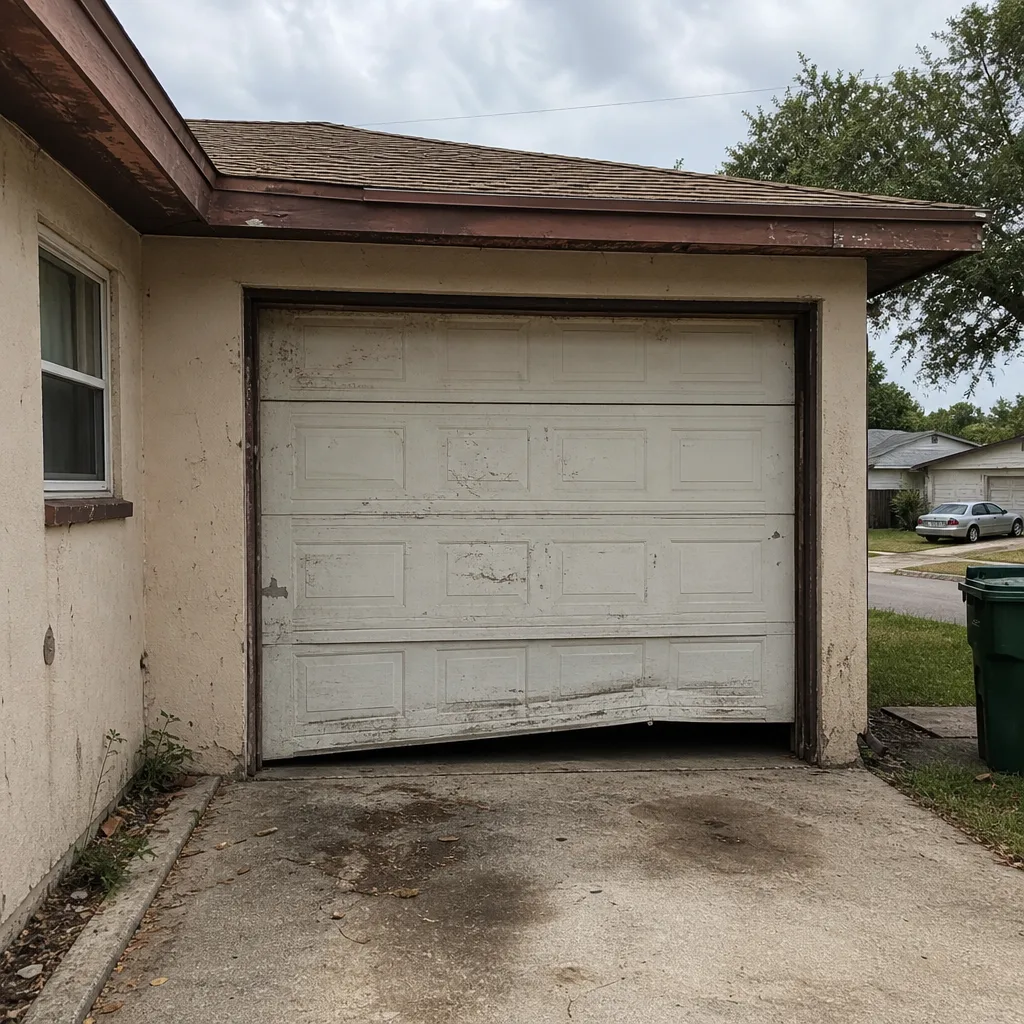 Before
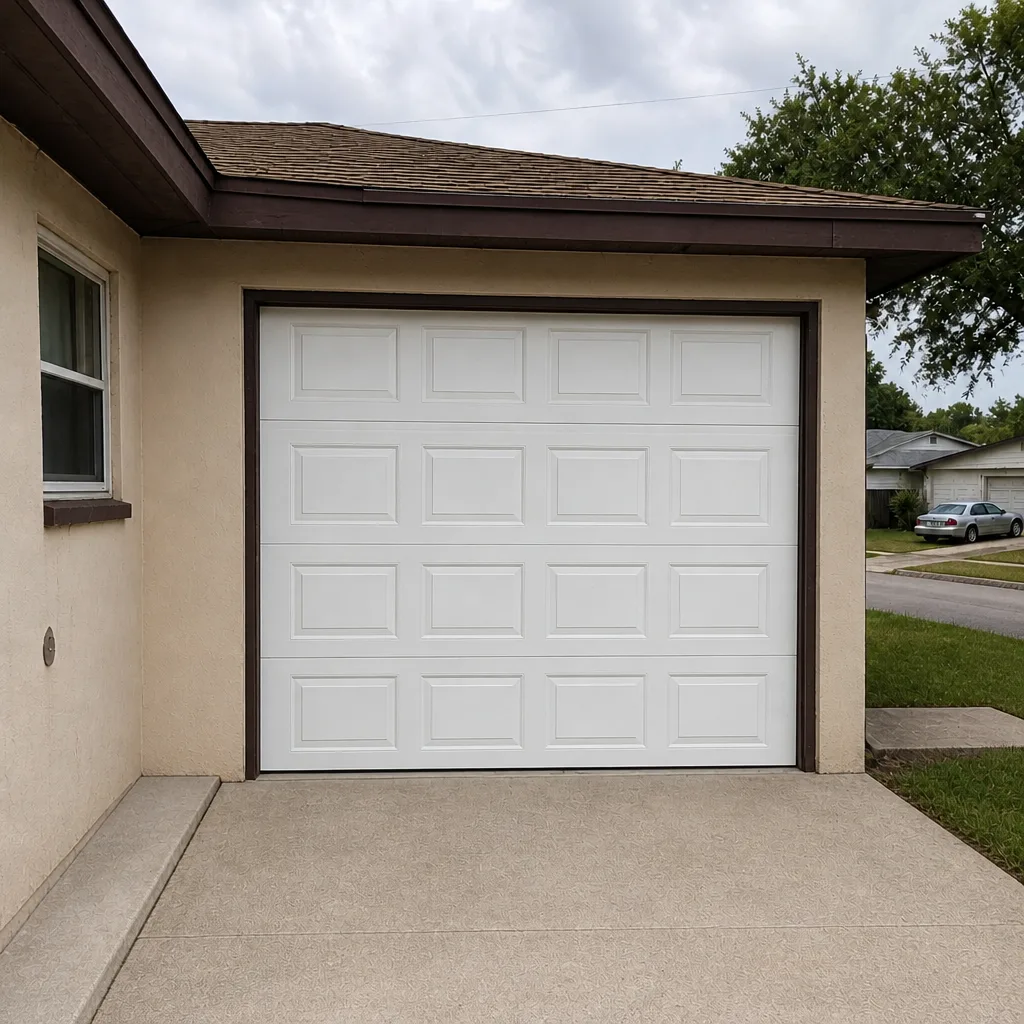 After
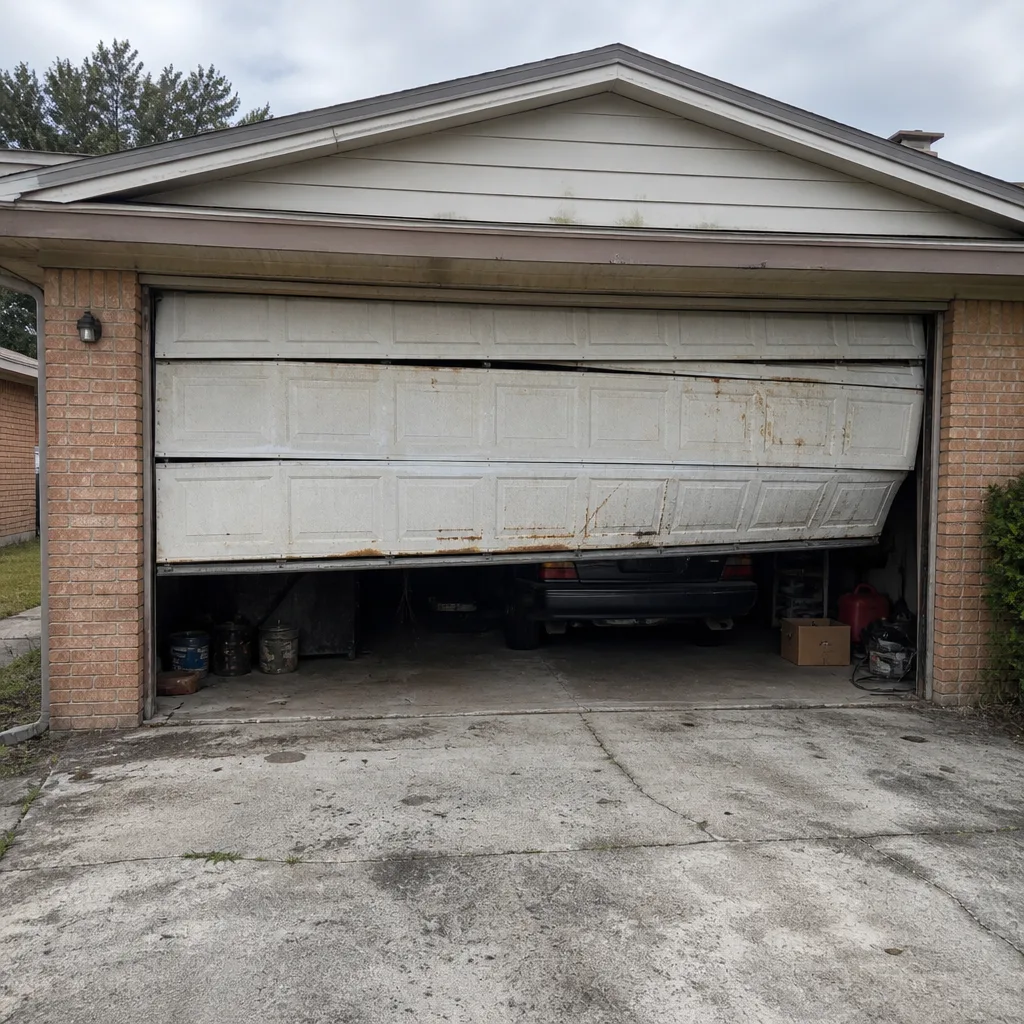 Before
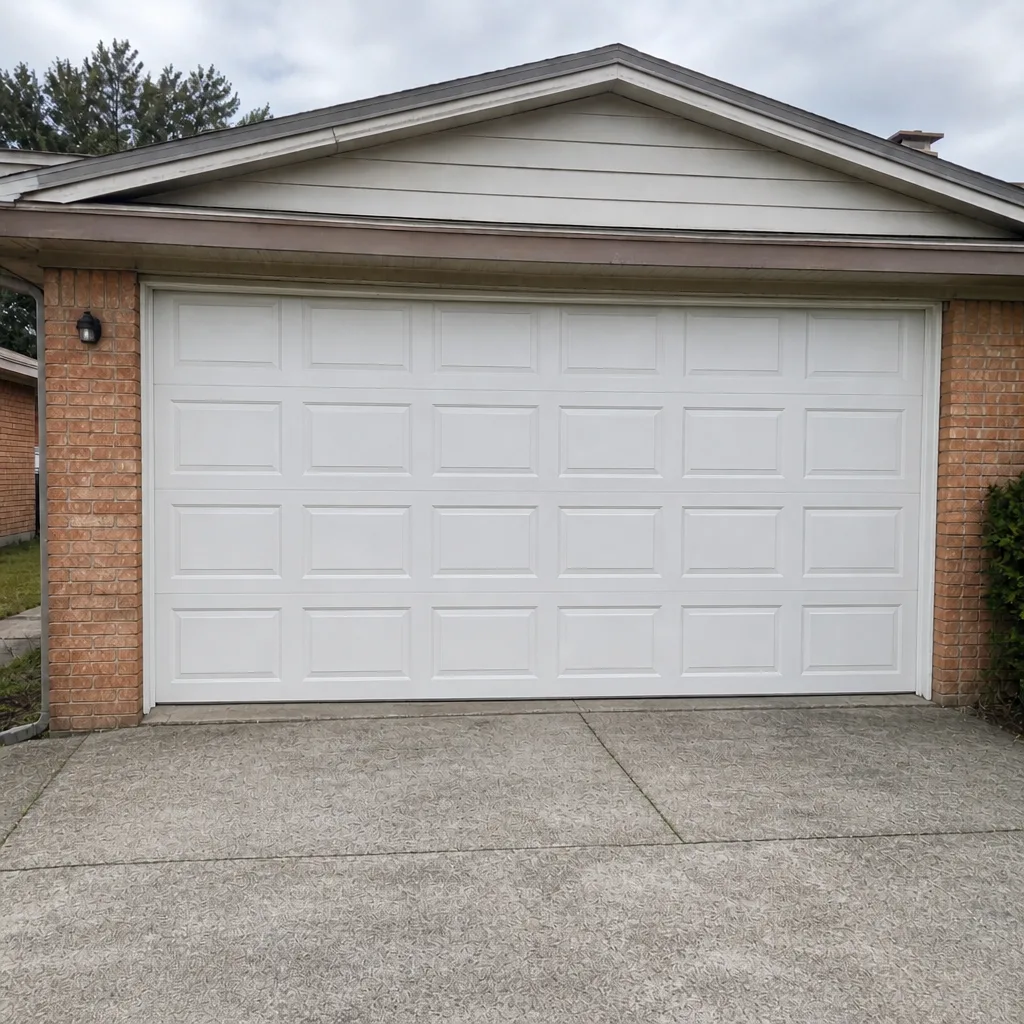 After
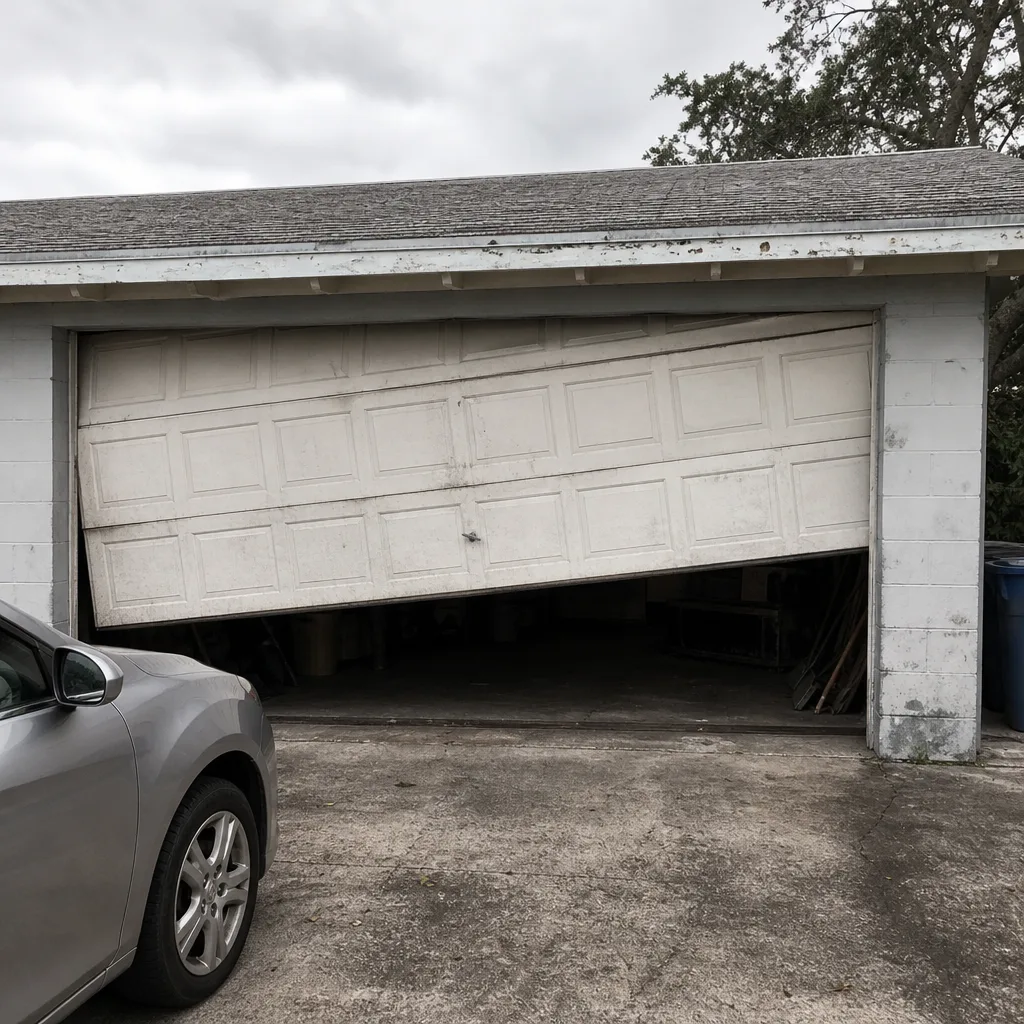 Before
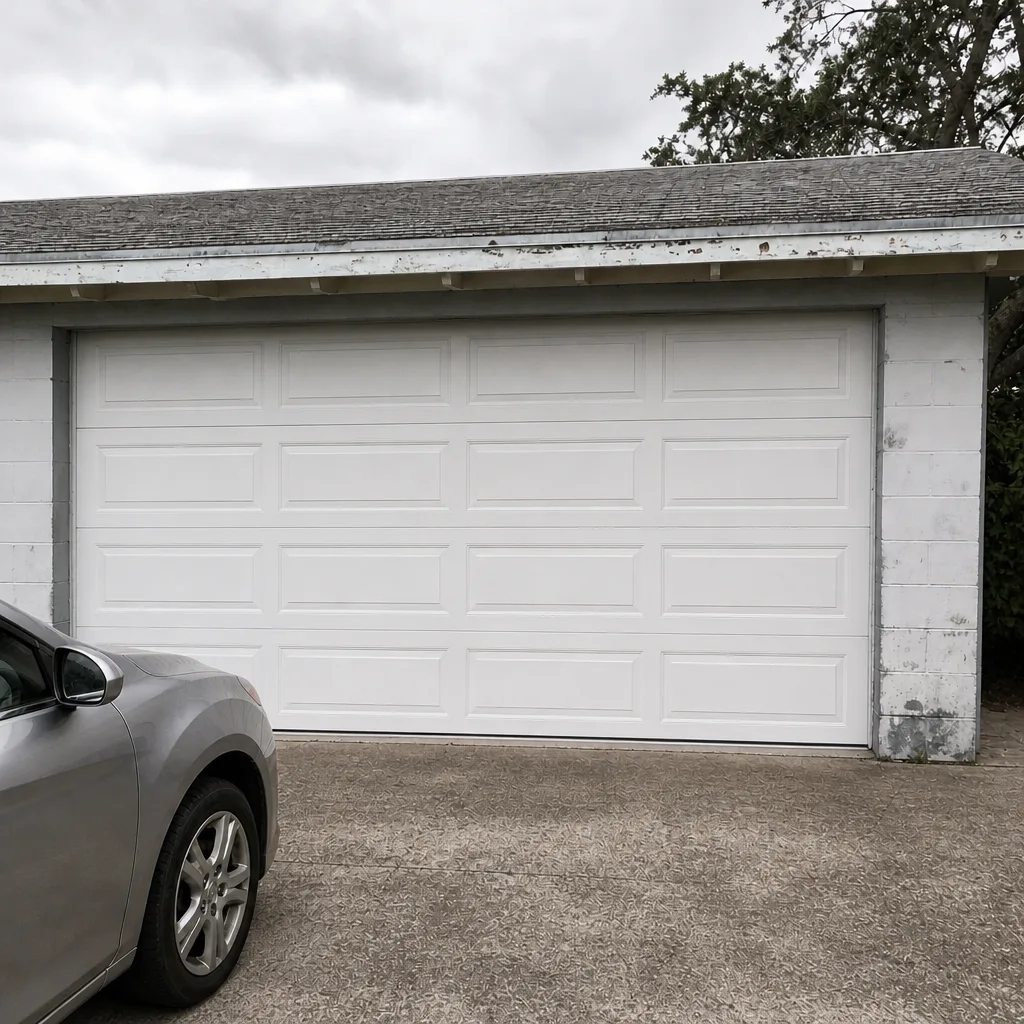 After
When to Call a Professional
Some problems are obvious calls. A snapped spring, a cable off its drum, a door hanging crooked on its track, or a door stuck open or closed all need a trained technician – and if access to your home or vehicle is blocked, that’s an emergency, so call rather than wait. Beyond the obvious, call when the door feels suddenly heavier, when it reverses or stops short, when the opener runs but the door doesn’t move, or when the hardware is showing rust you can’t stay ahead of. These are the warning signs that a small fix now prevents a bigger one later. Pinellas Park Garage Door Repair offers free estimates in Pinellas Park – call (877) 509-4184, and we’ll quote the price and agree it with you before any work starts. Our technicians have up to 8 years of experience, and we cover repair, opener work, springs, new installation, and emergency calls in one place.
Frequently Asked Questions
Springs in Pinellas Park often wear faster than the commonly quoted 10,000-cycle figure because humid, salty air corrodes them while they fatigue. You can’t judge life by the calendar alone, so watch for a heavier-feeling door, a visible gap, or a loud bang. If you suspect a failing spring, keep the door closed and call for an inspection – spring work is dangerous and belongs to a trained technician. Call (877) 509-4184 for an exact quote – estimates are free.
Yes. Garage doors in Pinellas County fall under Florida Building Code wind provisions, and a replacement door has to be rated for the wind pressures at your address, with the rating covering the full assembly. Ask your city’s building department what permit and documentation your address requires, and have a trained installer set the door. We can walk you through the product choices and install to spec.
Steel is the best all-around choice here, with aluminum and fiberglass close behind depending on your priorities. Steel doors from a maker like Clopay are galvanized and coated, so they resist corrosion well if you touch up scratches. Aluminum resists rust but dents more easily, and fiberglass never rusts but can fade under strong sun. In every case, the steel hardware – hinges, rollers, brackets – is what needs watching.
Yes. We service the opener you already have across LiftMaster, Chamberlain, Genie, and Craftsman, and diagnose the problem rather than defaulting to a replacement. Common fixes include stripped gears, failed safety sensors, and logic-board or wiring problems. A single visit usually identifies which one you’re facing. Call (877) 509-4184 for an exact quote – estimates are free.
Yes. Emergency garage door service is a real offering for us, not an add-on. If a spring snaps, a door jams off its track, or your door is stuck and blocking access to your home or vehicle, call right away and we’ll get it handled. Fast dispatch runs from 7am to 7pm.
Cleaning tracks, lubricating rollers, testing the safety reverse, touching up scratches, and changing a remote battery are reasonable DIY tasks. Springs, cables, hinge and bracket replacement, opener repair, track realignment, and new installation are professional work – springs and cables especially, because they’re under extreme tension. When in doubt, call and we’ll tell you which side of the line your job is on.
The Bottom Line
A garage door in Pinellas Park faces conditions most national guides ignore: humid air, salt exposure, and a building code written around storms. Springs and cables wear from corrosion as much as use, so hardware deserves your attention as much as the panels. Steel remains the sensible material choice, wind ratings are non-negotiable on a replacement, and the line between DIY and professional is clear – cleaning and lubricating you can do; springs, cables, openers, and installation you shouldn’t. Follow a climate-appropriate maintenance routine, act on warning signs early, and choose brands a local technician can actually service. When you need help, one call covers repair, opener service, springs, installation, and emergencies – and we quote the price before any work starts. Call (877) 509-4184 for a free estimate. For more on everything we handle, start with Pinellas Park Garage Door Repair.
Written by the team at Pinellas Park Garage Door Repair.